
Airflow ETL & Backup Pipeline
Summary
A production data platform built on HashiCorp Nomad, running Apache Airflow with Vault-backed connection strings. ETL DAGs ingest from HR, Records, SMS, Service Desk etc databases into a central warehouse surfaced through Metabase. Automated nightly backups ship to Backblaze B2, covering every production database.
Project Snapshot
My Role
DevOps & Data Platform Engineer
Duration
2 weeks · 2025
Context
Ghana School of Law
Outcome
Analytics platform live · 100% database backup coverage · zero credentials in DAG code
Stack
The Problem
Context
The school had multiple PostgreSQL databases (HR, records, service desk etc) with no analytics layer and no backup strategy. Business decisions were made without data.
The Pain
No visibility into school operations. Manual reporting took days. Any database server failure would result in permanent, unrecoverable data loss.
Why It Mattered
Student enrollment data, exam records, and HR information with no disaster recovery, a single drive failure away from catastrophic institutional data loss.
Goals & Requirements
Technical Goals
- Worked hand-in-hand with the analyst to Deploy Airflow on the existing Nomad cluster with no new infrastructure
- ETL from 3 PostgreSQL source systems into a central analytics warehouse
- Automated nightly backups to off-site cloud storage
- Zero credentials in DAG code or environment files
- Analyst team manages DAGs independently from infrastructure changes
Constraints
- Must run on the existing cluster; zero new infrastructure budget
- Analyst-owned DAG repository must stay isolated from infrastructure concerns
Architecture Design
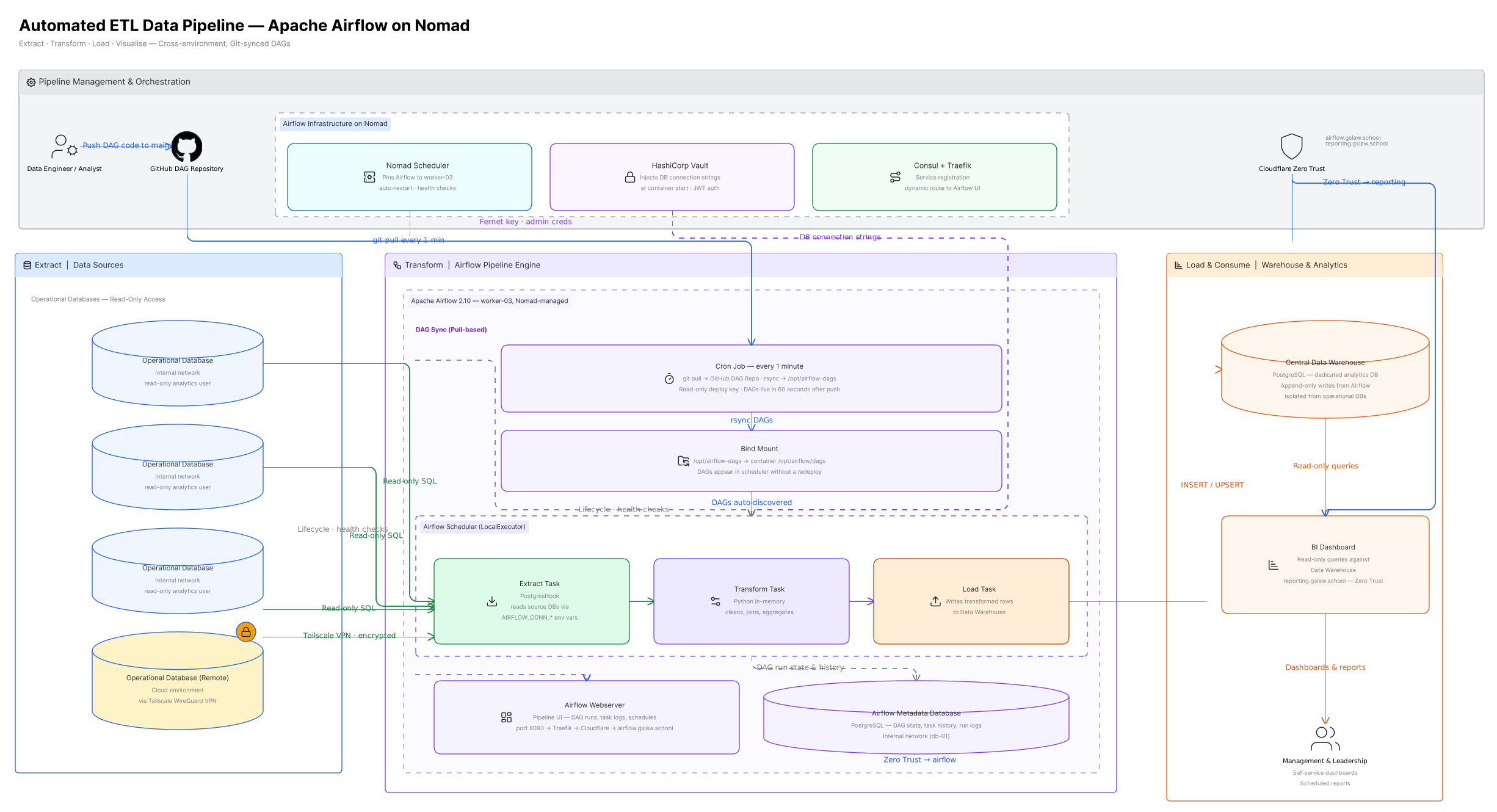
Airflow deployed as Nomad services (scheduler, webserver, workers) with Vault-backed connection URIs. A pull-based DAG sync model isolates analyst workflows from infrastructure. Backup jobs run as Nomad periodic tasks, one per database, with independent failure domains.
Scroll horizontally on smaller screens to view full diagram
Component Breakdown
Apache Airflow
DAG orchestration that schedules and executes ETL and backup tasks
HashiCorp Vault
Supplies database connection strings at task execution time, so zero credentials are stored in Airflow or DAG files
PostgreSQL Sources
HR, Records Management, and Service Desk source databases feeding the ETL pipeline
Metabase
BI dashboard layer surfacing warehouse data to school leadership and operations staff
Backblaze B2
Off-site backup destination for encrypted nightly dumps from every production database
Key Design Decisions
→Pull-based DAG sync from a separate analyst repository
Analysts own the DAG repository independently. A cron job on the Airflow worker pulls from the analyst repo, so analysts can update and deploy DAGs without ever needing cluster access.
→Vault-backed connection URIs over Airflow's connections UI
Airflow's connections UI stores credentials in its metadata database. Vault injection means credentials are fetched at task run time, never persisted in Airflow and never visible in logs.
Implementation Breakdown
Airflow on Nomad
Airflow scheduler, webserver, and Celery workers deployed as separate Nomad services with Vault-injected secrets.
- Separate Nomad jobs for scheduler, webserver, and Celery workers, for independent scaling
- Vault policy grants Airflow read-only access to connection string secrets
- Redis deployed as a Nomad service for the Celery broker
- Airflow metadata PostgreSQL runs on the existing db-01 node
ETL DAGs
Incremental ETL DAGs pulling from source databases into a central warehouse schema daily.
- Daily incremental loads with full-refresh fallback for schema changes
- Schema validation step before loading to catch upstream structural changes
- Alerting on DAG failure via webhook notification
- Pull-based DAG sync: a cron job pulls from the analyst repo to worker every 5 minutes
Backup Pipeline
Nomad periodic jobs run pg_dump on a nightly schedule, encrypt, and ship to Backblaze B2.
- One periodic Nomad job per database, giving independent failure domains and separate logs
- GPG encryption before upload, so backups are encrypted at rest in B2
- Restore procedure tested against a separate PostgreSQL instance monthly
- B2 lifecycle rules retain 30 days of daily backups
Challenges & Solutions
#1Airflow DB migration race condition on Nomad cluster restart
The Problem
Airflow runs database migrations on startup. On Nomad, after a cluster restart, the scheduler and webserver can start simultaneously. Both attempt the migration and one fails with a lock conflict.
The Fix
Added a dedicated pre-start migration Nomad job that runs to completion before the main Airflow services. Nomad lifecycle prestart hooks ensure the migration finishes before any Airflow process starts.
Results & Impact
Gave the school its first analytics platform and eliminated data loss risk across all production databases.
Before → After
Database Backup Coverage
Analytics Reporting
Credentials in DAG code
Business Outcome
School leadership has live dashboards for enrollment, HR, and service desk operations. Any database can be restored to the previous night within 30 minutes.
Reflections
Would Do Differently
- 01Add data quality checks (row counts, null rates) into the ETL pipeline from day one
- 02Use Airflow's Vault backend plugin instead of template injection for a cleaner secrets integration
Key Takeaways
- 01Running Airflow on Nomad requires careful attention to startup ordering. Lifecycle prestart hooks are the right tool, not sleep timers
- 02The pull-based DAG sync model was the right call. Analysts iterate freely without ever needing cluster access or infrastructure knowledge
Next Project
Multi-Region DR Platform
Solutions Architecture